Pages

Showing posts with label science. Show all posts

Tuesday, 26 November 2019

Complete combustion experiment ~ Science

In Science, we are learning about combustion so I have decided to do THIS

Combustion is when a chemical will react between the oxygen and another thing.

Aim: I want to find out what happens

Hypothesis:
There's not really a hypothesis because I already saw the video ( WHICH I DON'T RECOMMEND YOU WATCHING THE END RESULT BECAUSE THAT'S A SPOILER UNLESS YOU JUST WANT TO SEE THEN PROCEED WITH MY BLOG)

Equipment:
  • Water ( Colour it if you want to see what is happening)
  • Candle
  • Plate
  • Glass
  • Matchsticks or a lighter
Method:
  1. Grab your water with or without the colour in it 
  2. Pour your liquid on the plate half full.
  3. Place your candle in the middle of the plate.
  4. Light the candle
  5. Grab your glass and place it on top of the candle with the open side facing down so it's like a dome cave thing
  6. And now watch as see the magic


Results/ Observations:
I think it went pretty well as you can see from the videos... I hope 

Conclusion/ Discussion:
The reason why this happens is that there was oxygen in the glass with the candle in it which had a lot of oxygen ( Air) and so the something happens to make it be able to get rid of the air to make room for the water to rise in.

Evaluation:
What would I do the same?: Literally the same thing
What would I do differently?: Maybe find different was to see how it would work.

Monday, 21 October 2019

Volcanic Eruption

A Volcanic Eruption is where a Volcano just explodes meaning it erupts and spills out volcanic ash

Some names of volcanic eruptions are........:

Mount Tambora:
Mount Tambora is located in Kawinda Toi, Tambora, Bima, West Nusa Tenggara, Indonesia
Image result for Mount Tambora on world map
Mount Tambora first eruption was in 1815
Mount Tambora last erupted was in 1967
Image result for Mount Tambora:

Krakatoa:
Krakatoa is located in Anak Krakatau Island, Pulau, South Lampung Regency, Lampung, Indonesia
Image result for Krakatoa: on world map
Krakatoa erupted in 1883
Krakatoa last eruption was 2018
Image result for Krakatoa:
Mount Pelee:
Mount Pelee is located in Arrondissement of Saint-Pierre, Martinique

Mount Pelee first eruption was in 1902
Mount Pelee last eruption was in 1932
Image result for Mount Pelee:
stratovolcano
Nevado del Ruiz:
Nevado del Ruiz is located in Villamaría, Caldas, Colombia
Image result for Nevado del Ruiz: on world map
Nevado del Ruiz first erupted in 13 November 1985
Nevado del Ruiz last eruption was in 2016
Image result for Nevado del Ruiz:
stratovolcano
Mount Vesuvius:
Mount Vesuvius is located in 80044 Ottaviano, Metropolitan City of Naples, Italy
Image result for mount vesuvius on world map
Mount Vesuvius last eruption was in March 1944
Image result for Mount Vesuvius:
Mount Vesuvius type of volcano is stratovolcano

Friday, 27 September 2019

Wind racer~Science

In science, we are focusing on forces and how it affects everyday items and equipment. So to demonstrate it we decided to make wind racers ( Sails ) soooooo here is the process we had to go through...


  1. Research: The first step was to look up what is it and all the forces that act on it and how to make it glind through the wind.
  2. Design: The second step was to design it and make the pictures and images come to life ( 3D). Our design was dived by three ( Because we had three people in our team) 
  3. Build: The third step was to build it and draw it. BUT now we had 5 people in our team but two members were not there so we divide it but three and so that one of the members the weren't there can draw on one of there mates bit. SO I decide to put the country's I am from so I put half Filipino and half New Zealander because that's what I am. We also put two cardboards at the bottom to make it go through the air a little bit faster and longer.
  4. Test: Now came the test, so one of our team members had to use the leaf blower for it to be able to go through the wind. So we had to record the time/long the racer went through the wind and our time and distance were 5.07 seconds and 2.30m was our distance.
  5. Redesign/ Make changes: So after the first testing, we were able to redesign and make changes so it can be improved. SO what we did was cardboard in the middle of the paper and the pole.
  6. Test: SO now the redid test came back, so we tested it and..... it failed because the original distance was 2.30m but we did 1.80m -________- so I wasn't pleased ( I was flipping out because the original was better than the second one) 
  7. Evaluation: SO, in conclusion, the original one was better with two cardboard at the bottom and just paper for the sail.

( I'll add the photo later so you can see what it was)

Monday, 1 July 2019

Acid Rain - Science

Acid Rain

  1. What is acid rain?:  Acid Rain is when fossil fuels such as coal, oil, and Natural gas escapes through the air to form Carbon and Sulfur dioxide, and Nitrogen Oxides. That will float all the way to the clouds and will blend its molecules into the clouds and when it eventually rains it will turn into Acid Rain.
  2. The diagram shows you that the Factory will release fossil fuels and then the chemicals will blend into the clouds when it eventually rains the rain will turn into acid rain. That will affect the water, building, and the forest around us.
Image result for acid rain diagram

Wednesday, 26 June 2019

Science research- Metals


In science, we are learning about metal....so in class, we have to create some type of learning to show what we want to learn about metals, here is my presentation.

Friday, 21 June 2019

Corrosion Experiment- Science

Aim: To investigate the Factors that cause iron to rust.

Hypothesis: I believe ( which makes me sound smart instead of saying " I think") that the salt water will be effective because salt has a lot of --------( don't know how to describe) chemicals.

Equipment: 5- less test tubes, Test tube RACK, a bung, 5- less iron nails, Nail polish, Vegetable oil, Saltwater, Calcium Chloride, Magnesium, water.

Method:

  1. GrAb yA nAiLs ( grab your nails)
  2.  gRaB tHe LiQuId yA nEeD ( Grab the liquids you need)
  3. pAiNt tHe nAiL aNd wAiT fOr iT tO dRy, oNcE iT iS dRy pLoOp tHe nAiL iN tHe wAtEr. ( paint the nail and wait for it to dry, once it is dry ploop the nail in the water)
  4. pUt sOmE OiL iN tHe nExT tEsT tUbE aNd aDd tHe nAiL. ( Put some oil in the next test tube and add the nail)
  5. aDd sOmE sAlTwAtEr iN tHe oThEr tEsT tUbE tHeN aDd tHe nAiL. ( add some saltwater in the other test tube then add the nail)
  6. tHe nExT tEsT tUbe y'AlL aDd iS cAlcIuM cHloRidE aNd tHeN aDd yOuR nAiL. ( the next test tube y'all add is calcium chloride and then add your nail.)
  7. tHe lAsT LiQuId yA aDd iN tHe lAsT tEsT tUbE iS mAgNeSiUm aNd pLoOp yA nAiL iN. ( The last liquid you add in the last test tube is magnesium and ploop your nail in)
  8. lEaVe oVeR tHe nExT 4 dAyS aNd y'AlL hAvE y'AlL rEsUlTs. ( Leave over the next 4 days and you'll have your results)
Observation:
The nail polish only had a little rust at the top, but other than that there was some nail polish that came off.
The oil had no rust, it was just oily.
The saltwater caused nothing.
The calcium chloride had only a little rust in it.
The magnesium didn't rust.

Conclusion:
My guess was wrong because I believed that the saltwater would be more effective, but it was only the Calcium Chloride and the Nail polish.


Thursday, 16 May 2019

Atomic Science- Science

In Science, we are learning about Atomic Science and we have to show are learning so... I decided to choose a poster so here it is


  1. Word Equations in Science is when two or more chemicals are mixed together to produce a chemical reaction or a type of chemical product.
  2. Balancing Symbols is when you have two chemicals that have balanced atoms in each of them to be able to make it a balanced chemical equation. ( Didn't really know how to explain it because that topic/part of the page was too hard for me to understand and get it in my brain, out of 100 I would say I know 70% of it)  
  3. Atoms are things that contain Electrons (-), Protons (+), and Neutrons (0). Everything is made out of atoms even YOU!!
  4. Elements are chemicals symbols that use usually use the name of the chemical. Its symbol can be one or two letters of the chemicals name but some chemicals don't start with there starting letter such as Gold=Au

Thursday, 11 April 2019

Genetics & Evolution

In Science, we are learning about Genetics & Evolution and we have to show are learning so... I decided to choose a poster so here it is


  1.  How you have Different DNA and different caustics to make you who you are.
  2. The everyone has 46 Chromosomes ( 23 each)
  3. That the Big Letter is dominant the little one
  4. Some animals have a bone in their body that is Vestigial. ( meaning it keeps going into there body where it doesn't work anymore.)


More in description:
  1. In DNA their nucleotides that repeats its self. A Nucleotides are made up of Sugar, Phosphate, and a base. There are different types of Nucleotides ( there are four of them) Adenine ( A) , Thymine ( T) , Cytosine ( C), and Guanine ( G)  
  2. The Chromosomes are what holds the DNA and the patterns to makes a human characteristics.
  3. Punnett squares are where it shows only the probability of what might occur and what is not. Punnett squares have dominant and recessive allele.
  4. Animals all had a vestigial structure at some point ( a future in there body that doesn't show or it's hidden)

Extracting DNA in Kiwi Fruit- Science

Aim:
To extract DNA from the kiwi fruit to observe it.

Equipment:
  • Spatula
  • Zip Lock Bag
  • Kiwi Fruit
  • Test Tube ( If you have one)
  • Dishwashing Liquid 
  • Ethanol 
  • Salt
  • Water
Method:
  1.  Put half a Kiwi fruit into a bag and mush it together , take the brown skin out and then add a pinch of salt and 25ml of water OR you can scoop the Kiwi fruit into the bag and then do the water and salt thing ( Recommend doing the brown skin one because you get all the juice and the rest of the fruit)
  2. Add dishwashing liquid
  3. Grab a funnel and a cloth and drain it the DNA down into a test tube
  4.  Then tilt your test tube on a 45-degree angle and add 10ml of Ethanol 
  5.  Get it to sit there for 5 mins and then wait what it does.
  6. If you want you can grab a spatula and scoop slowly the DNA
Results/ Observations:
I found it fascinating how they Kiwi fruits DNA can float up to the top. Also what I found fascinating is all these chemicals can blend in to make things appears and have a reaction.

Discussion/ Conclusion:
FUN FACT: don't drink the Ethanol because it's stronger than alcohol and it will kill you. Other than that life lesson everything went well and successful.

Here are some photos:
( Update them later because its being mean right now)


Tuesday, 26 February 2019

Anaerobic Respiration- Science

Aim:
To demonstrate the effects of anaerobic respiration (muscle fatigue).

Hypothesis:
I think what will happen is when I'm closing and opening the peg my muscle will get really tired ( how long I think I'll last is a good 5 minutes)

Equipment:
 A spring-loaded clothes peg.

Method:

  1. Hold the clothes peg like so
  2. Relax your fingers so that the peg close all the way.
  3. Squeeze your thumb and forefinger so the peg is fully open.
  4. Repeat step and 3 as quickly as you can until you experience muscle fatigue. ( don't do it too hard)
Results/ Observations:
My muscle was all goods at the start (I lasted at least a good 2 mintues/1min and 50secs) and then my muscle got tired at 1 min so I keep going until I gave completely.

Conclusion/ Discussion:
The reason why are muscle gets tired is because of the muscle in your body is working but, the oxygen in your lungs is trying to keep up and that's how you get sore and tired. In conclusion, I think I did well but I should have last longer.

Evaluation:
What would I do the same?: I would keep going until I give up
What would I do differently?: Maybe lift my other three fingers up ( because I touched my fingers in and the hurt a part of my hand)

Wednesday, 7 November 2018

Landing on the moon model : science

Aim: I want to build a model of the landing on the moon.

Method:

  • Grab the A4 box and paint the outside of the box the galaxy/space.
  • Grab your paints and paint brushes and paint either the galaxy or Space in the box and the lid of it.
  • Grab the glue and sand, apply glue to the bottom of the box and lay out your sand and let it dry.
  • Create your little tinfoil man and glue his feet on the sand. Also create your little spaceship and glue that to the bottom. While your gluing stuff also create the flag and the poll and stick that down too.
  • You can decorate it more if you like.


Equipment:

  • A4 paper box. ( the paper comes in)
  • Tinfoil 
  • Paint ( black,purple,white,)
  • Paper
  • Glue
  • Sand 
  • Paint Brushes
  • One tooth pic
  • Colour in pencil/ felts

Reflection

Wednesday, 12 September 2018

What happens to Food? : Updated

Ingestion:

  • When food goes into the mouth it is going through a process to be digested
  • Chew Food is called Masticating
  • Swallow Food
  • There are three important teeth that help you digest your food. Canine that helps you with your ability to rip and tear the flesh off the bone, Incisors helps out with the cutting of the food, and the molars are used for crushing and grinding the food
Image result for diagram of your teeth

Image result for eating food
https://www.google.co.nz/search?q=eating+food&rlz=1CAACAT_enNZ794NZ804&source=lnms&tbm=isch&sa=X&ved=0ahUKEwj_vZ620qLdAhXBdt4KHeE3D7EQ_AUICigB&biw=1366&bih=629&safe=active&ssui=on#imgrc=3LUEGp5FBJtDcM:

Digestion:

  • To process


Absorption:

Egestion:

Bolus:

  • It is a ball shape form that goes down your Oesophagus.

Oesophagus:
Image result for food going down the oesophagus gify
https://www.google.co.nz/search?rlz=1CAACAT_enNZ794NZ804&biw=1366&bih=629&tbm=isch&sa=1&ei=dWyQW-3ODc2roASuqYqoCg&q=food+going+down+the+oesophagus+gify&oq=food+going+down+the+oesophagus+gify&gs_l=img.3...25110.25110.0.25949.1.1.0.0.0.0.223.223.2-1.1.0....0...1c.1.64.img..0.0.0....0.jN9xD_x9aKU&safe=active&ssui=on#imgrc=okQnijBBrwMbjM:

Persidtalsis:

Mechanical:

Gastric Juices:

Enzymes:


Digestive Processes=

Stomach:

Liver:
The way the nutrients go to the small intestines to the liver is that the nutrients get absorbed and transported to the liver via the hepatic portal vein. That nutrient is converted to either energy, transported to a working muscle or stored for use later. The green-coloured fluid is called Bile. The fluid is stored in the gallbladder. The bile is an alkaline fluid. The alkaline neutralises the acidic from the stomach to prevent it digesting the rest of the digestive system.

Facts:

If you want a liver replacement the closest thing is a pigs one
You can re-grow your liver
The ancient Greeks thought the liver was god in them.


Thursday, 23 August 2018

Digestive system : Science: Updated

Image result for digestive system

Mouth:

  • The mouth is used for digest food
  • We use our teeth to chomp down the food
Oesophagus:
  • It is a chub that sends the processed food down


Why do we have a mouth?: To chomp down all the food so it can go down the oesophagus and so on.
What else do you do with your mouth?: It moves and makes you talk and taste
Image result for gif mouthImage result for gif mouth

Fun Facts about the inside of your body ( Digestive system)

Thursday, 9 August 2018

Food Test : Science

Testing for Simple Sugars- The Benedict's Test

Aim:
I want to find out how to test for simple sugars

Equipment:

  • Bunsen Bunner
  • Test tube tongs
  • Benedict's Solution
  • Food Sample
  • Test tubes
  • Safty Glasses
Method:
  1. Place about 2mL of the food sample into the test tube then add 5 drops of Benedict's Solution
  2. Gently heat the test tube over a blue flame. DO NOT BOIL!!
Result:
A positive test for a simple sugars results in the Benedict's Solution changing form a Blue colour to a Yellow colour to an Orange/Red colour.

Conclusion:
When you heated the chemicals it went the colours down of the rainbow starting from Blue and went down but normally it would stop at orange but if your lucky and it didn't expold you would get red.


Testing for Complex Sugars- The Iodine Test

Aim:
I want to find out if a simple of food contains complex sugars.

Equipment:

  • Test tube
  • Food Sample
  • Iodine Solution
Method:

  1. Place about 2mL of the sample in a test tube.
  2. Add 3-5 drops of iodine and mix.
Results:
If complex sugars (i.e starch) are present the iodine solution will change from a brown colour to a blue/black colour.

If the iodine solution does not change colour then no complex sugars are present.

Conclusion:
We used breed for this and indeed it had complex sugars because it turned black.

 Testing for Protein-The Biuret Test

Aim:
To test if a sample of food contains protien.

Equipment:
  • Test tube
  • Sodium hydroxide( NaOH) 
  • Copper sulfate ( CuSO4
  • Food Sample
Method:
  1. Place about 2mL of the sample into a test tube and add 5 drops of sodium hydroxide.
  2. Add 5 drops of copper sulfate.
  3. Shake the test tube gently from side to side.
Results:
If the solution remains blue, then no protein is present. If the solution changes to a purple colour then protein is present in the sample.

Conclusion:
The liquids chances from to orange/Yellow to Green to Purple, but my group took its time and we got the formula out of place so we ended up using the teachers we got a video of it but it's not family friendly.


Friday, 29 June 2018

The Animal Kingdom ( science) Part 2

List of Different types of...
True Worms: ( 24,000 species) Flatworms (12,000 species)
Image result for true wormswormImage result for tapeworm FlatwormImage result for trichinosis worms      Trichinosis

  • Body is tubular and/or made up of segment.
  • Tube-like digestive system.
  • Breathe through their skin.
Sponges: (10,000 species)
Image result for different types of sponges        Image result for CalcareaCalcarea
 Image result for Homoscleromorpha     Homoscleromorpha
  • Take in water through pores ( little holes) in their bodies from which they filter (take out) little bots of food.
Cnidarians ( 9,000 species):
Image result for MyxozoaMyxozoaImage result for Sea anemone Sea anemone
Image result for ScyphozoaTrue Scyphozoa
  • Hollow body with specialised cells (stingers) that they use for capturing prey.
  • Live in water.
Molluscs (100,000 species)
Image result for CuttlefishCuttlefishImage result for KimberellaKimberellaImage result for AplacophoraAplacophora

  • Most live in the sea.
  • Most have shells.
  • Unsegmented body.
Echinoderms (9,000 species)
Image result for BlastoideaBlastoided    Image result for Sea cucumber Sea Cucumber           rImage result for Brittle stars Brittle Stars

  • A skeleton made up of five plates.
  • Tube feet.
  • Live in the sea.
Arthropods (> 1,000,000 species) 
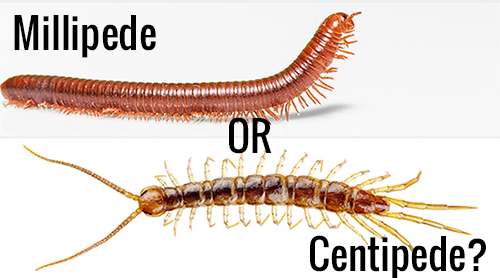
Image result for Centipede Centipede Image result for Millipede Millipede
Image result for Sea spider    Sea Spider
  • Jointed legs.
  • Divided into four further sub-group.
Crustaceans
Image result for Barnacle Barnacle Image result for Cladocera Cladocera (water Flea) Image result for Maxillopoda Maxillopoda
  • Most are aquatic
  • Body divided into three part.
  • Most breathe with gills.
  • Hard outer skeletons.
Myriapods
Image result for Pauropoda    Pauropoda Image result for Symphyla        Symphla Image result for Millipede Millipede and Centipede (two for one)

  • Many pairs of legs.
  • A single pair of antennae.
  • Simple eyes.
Insect
Image result for mole cricket Mole Cricket Image result for Assassin Bug Assassin Bug Image result for Snakefly Snakefly
  • Body divided into three parts.
  • Three pairs of legs and two pairs of wings.
  • One pair of antennae on head.
  • Compound eyes.
Arachnids
Image result for Harvestmen         Harvestmen     Image result for Palpigradi     Palpigradi 
Image result for Acari   Acari

  • Body Divided into two pairs.
  • Four pairs of legs and no wings.
  • No antennae.